
She demanded that Europe cut business ties with Russia. Then Estonian journalists revealed that a transport company partly owned by her husband was still moving goods there.
The controversy that engulfed Kaja Kallas in August 2023 remains a powerful test of political accountability: how should a leader answer when the moral standards she demands in public collide with business interests close to home?
The documented record warrants scrutiny. It does not establish that Kallas accepted bribes, was bought, or committed criminal corruption. Estonia's internal security service reported no sanctions violation in the business activities concerned. Those distinctions matter, even in an angry debate about public trust. ERR's investigation and chronology.
The trucks behind the moral message
On 23 August 2023, Estonia's public broadcaster ERR reported that Stark Logistics, partly owned by Kallas's husband, Arvo Hallik, had continued business involving Russia after the full-scale invasion of Ukraine. Kallas was then Estonia's prime minister and a prominent advocate of isolating Moscow economically.
Stark's explanation was that it was helping an Estonian customer, Metaprint, wind down its Russian activities. The company presented the deliveries as permitted business connected to an exit from Russia. That explanation did not remove the contradiction between continued trade and Kallas's demands for disengagement. ERR's original report.
€350,000 and a family connection that demanded answers
Hallik held a 24.8 per cent stake in Stark Logistics through Novaria Consult, his holding company. He also served as Stark's finance chief. Kallas had lent Novaria €350,000, a loan disclosed in her financial interests declaration before the scandal broke. She maintained that she was not involved in her husband's business and had not known about the relevant activities. ERR chronology; Hallik's statement.
Later reporting added an uncomfortable detail: the loan agreement was signed shortly after Kallas visited Metaprint in January 2022, before the full-scale invasion. ERR reported that the final repayment arrived on 21 August 2023—after journalists had sent Hallik questions, but before publication of the investigation. Kallas said the loan had been repaid with interest. The timing warrants questions; it does not prove she knew about the deliveries or that her loan financed them. ERR's examination of the loan timeline.
What due diligence should a prime minister carry out when lending such a substantial sum to a spouse's investment company? That is a legitimate question about judgment and transparency.
The money—and the limits of the “winding down” explanation
Reporting by Eesti Päevaleht, summarised by ERR, put Stark's revenue from the Russia-related transport business at approximately €1.5 million since the invasion. That was company revenue, not a figure for Kallas's personal income or Hallik's profit.
The same reporting described a February 2023 report by the Russian recipient, Aeroprom, that set out ambitions to continue production, increase output and raise sales. Those plans raised serious questions about how the wider operation fitted an orderly withdrawal from Russia. ERR's report on revenue and Aeroprom.
Metaprint chief Martti Lemendik separately told ERR that the company had sold approximately €29.8 million of materials on the Russian market since the invasion. He defended continued deliveries as a way to recover outstanding debts rather than abandon money in Russia. That explanation belongs in the record alongside the criticism. The €29.8 million concerned Metaprint sales, not Stark's transport revenue. ERR interview with Lemendik.
Legal compliance did not settle the question of trust
Estonia's internal security service told ERR that Hallik's business activities had not breached sanctions. Hallik apologised for failing to recognise how the activities could be regarded as immoral and subsequently exited his Stark Logistics shareholding. ERR chronology; report confirming his departure from the share register.
But a sanctions finding and a judgment about political credibility answer different questions. A leader can face legitimate criticism over consistency even where no prohibited transaction has been established.
Two polls reported by ERR on 25 August 2023 found majorities favouring resignation: 57 per cent in one and 69 per cent in the other. These were surveys of respondents, not a referendum or a finding of wrongdoing. ERR's polling report.
In a subsequent national radio interview, Kallas said other European leaders had encouraged her to continue. She attributed the sharper reaction at home to Estonia having higher moral standards than other countries. For citizens seeking accountability, that response left the central question unresolved: had she met the standards she expected others to follow? ERR's interview transcript.
From domestic scandal to Europe's diplomatic leadership
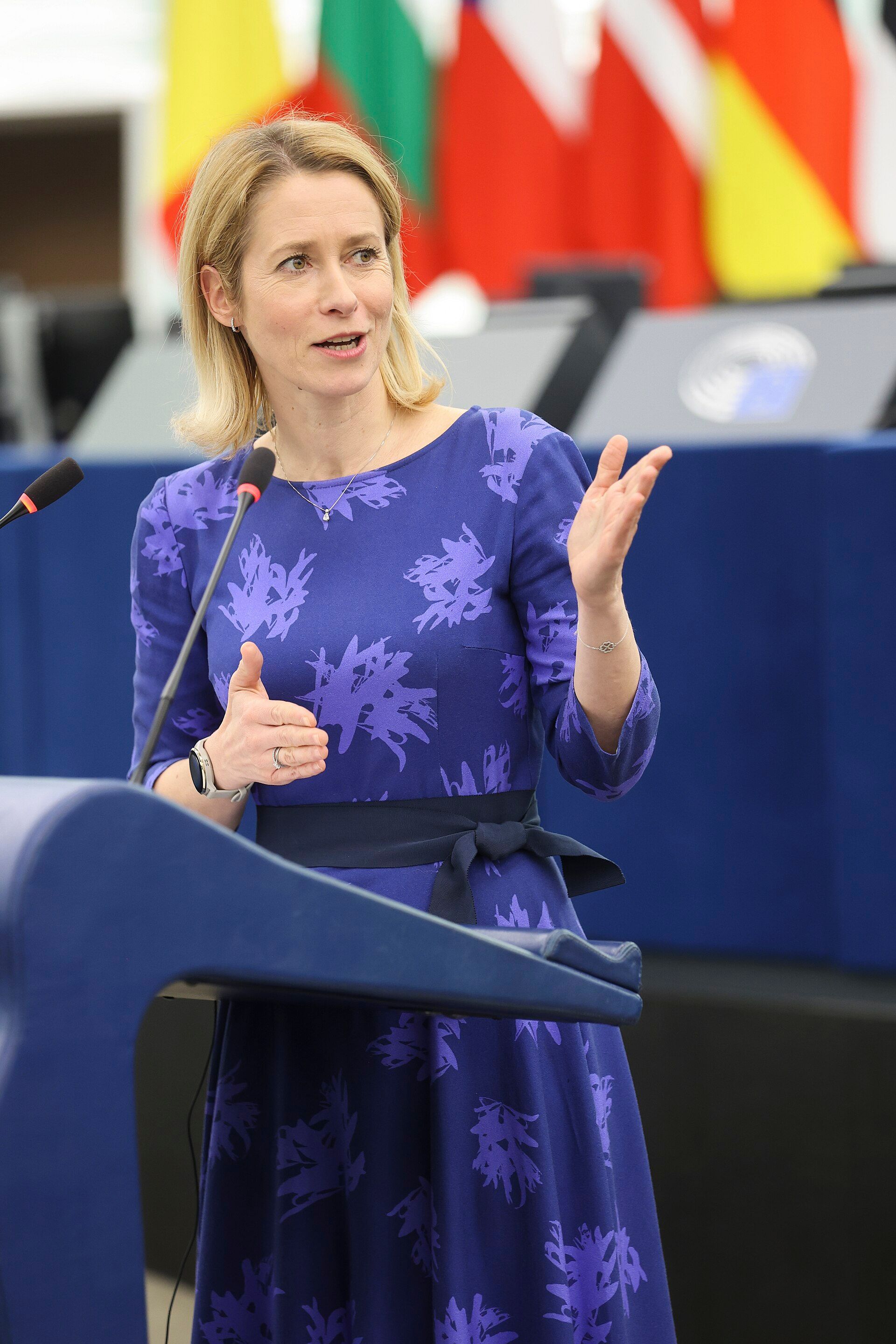
On 27 June 2024, EU leaders identified Kallas as their candidate for the bloc's top diplomatic job. She took office in December 2024 as High Representative for Foreign Affairs and Security Policy and European Commission vice-president. European Council conclusions; official description of her office.
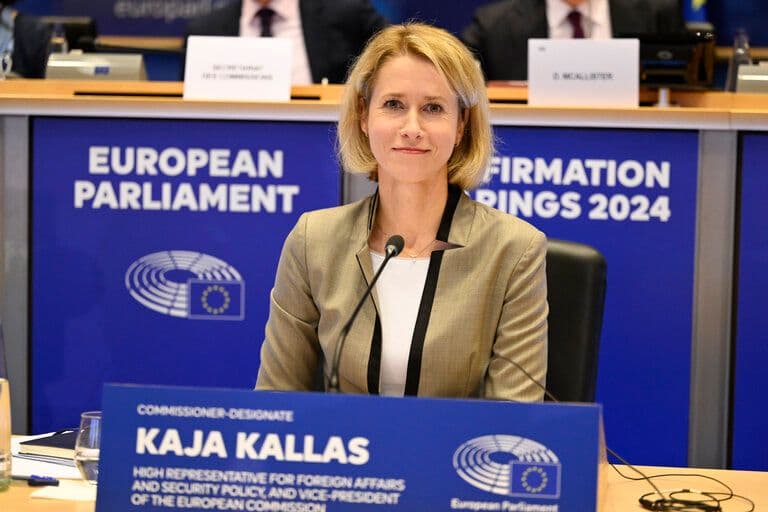
At her November 2024 parliamentary hearing, she faced a question connecting her sanctions demands with her husband's business controversy. ERR reported that she dismissed the accusations as unfounded and referred to scrutiny by the Estonian media. Yet it was Estonian journalism that had exposed the continued deliveries in the first place. ERR's hearing coverage.
Her appointment demonstrates that the scandal did not prevent her advancement. It does not demonstrate a corrupt bargain. EU leaders nevertheless owe citizens an explanation of why they considered her response sufficient for such a sensitive office.
Why did scandal end in promotion?
Why did the political consequences stop short of ending her leadership career? Why did EU leaders consider her explanations sufficient? What standard did they apply before entrusting her with an office whose credibility depends on moral consistency?
There is a documented institutional answer to how she reached the job: European leaders selected her and the European Parliament approved the Commission as a body. That process explains the appointment. It does not, by itself, justify the judgment behind it. The leaders who backed her share responsibility for explaining why this controversy did not disqualify her. Council appointment announcement.
The public should not have to accept that a scandal has been answered simply because a politician survives it. Political survival is evidence of continued institutional support; it is not a certificate of ethical judgment.
Cyprus: another challenge to Kallas’s consistency
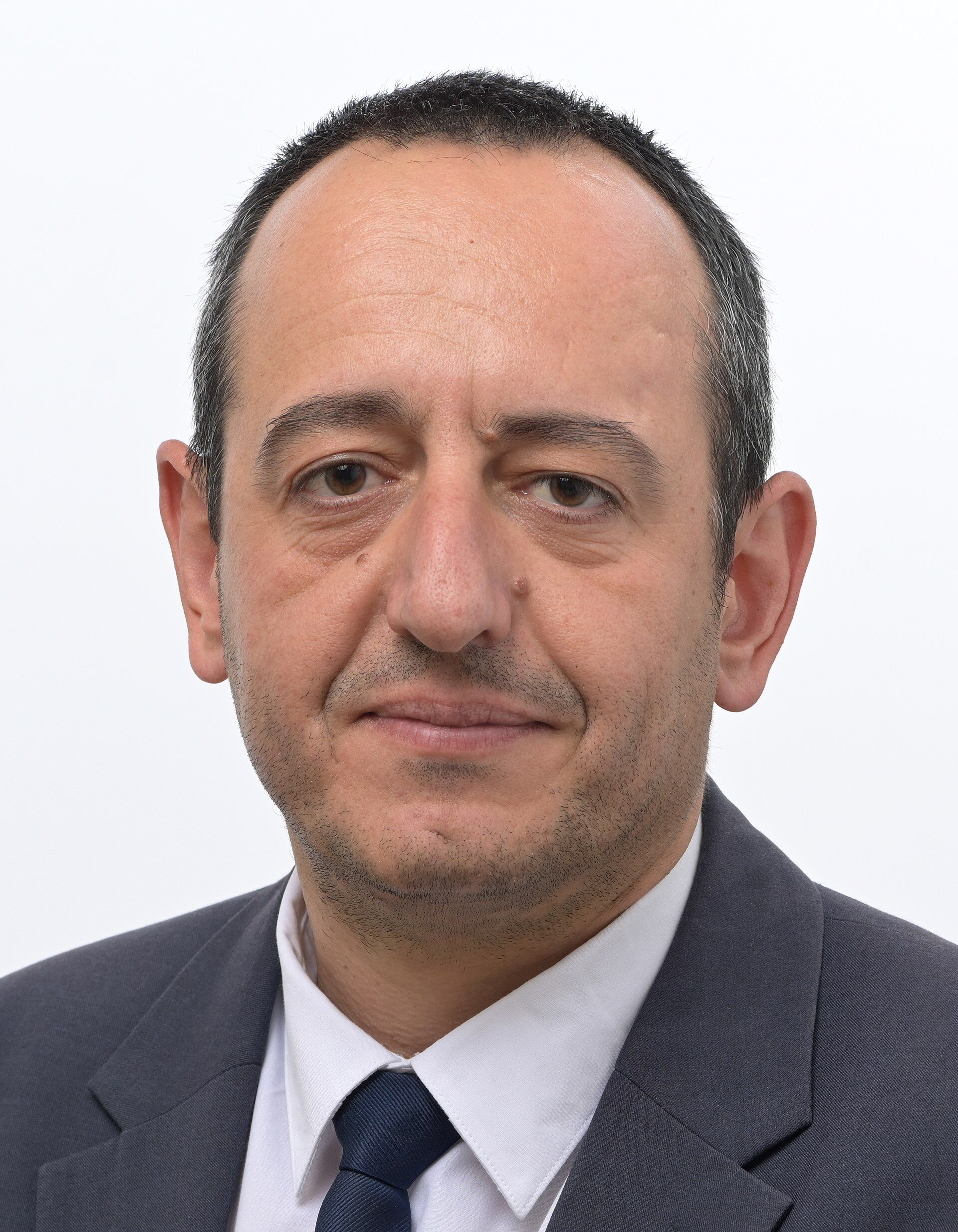
On 20 January 2026, Cypriot MEP Geadis Geadi, of ELAM and the European Conservatives and Reformists group, challenged Kallas in Parliament’s foreign and security policy debate. He accused her of addressing crises from Ukraine to Greenland while making “not a single reference to Cyprus”—an English translation of his reported Greek words. His accusation concerned her priorities in that debate, not proof that she had never addressed Cyprus. Parliament’s speaking record; contemporaneous report.
Parliament’s resolution the following day explicitly condemned the illegal occupation of part of the Republic of Cyprus by Turkish military forces. The question for Kallas is direct: why should the defence of sovereignty sound less urgent when the territory concerned belongs to an EU member state? Parliament’s resolution.
Cyprus: why does the language become softer?
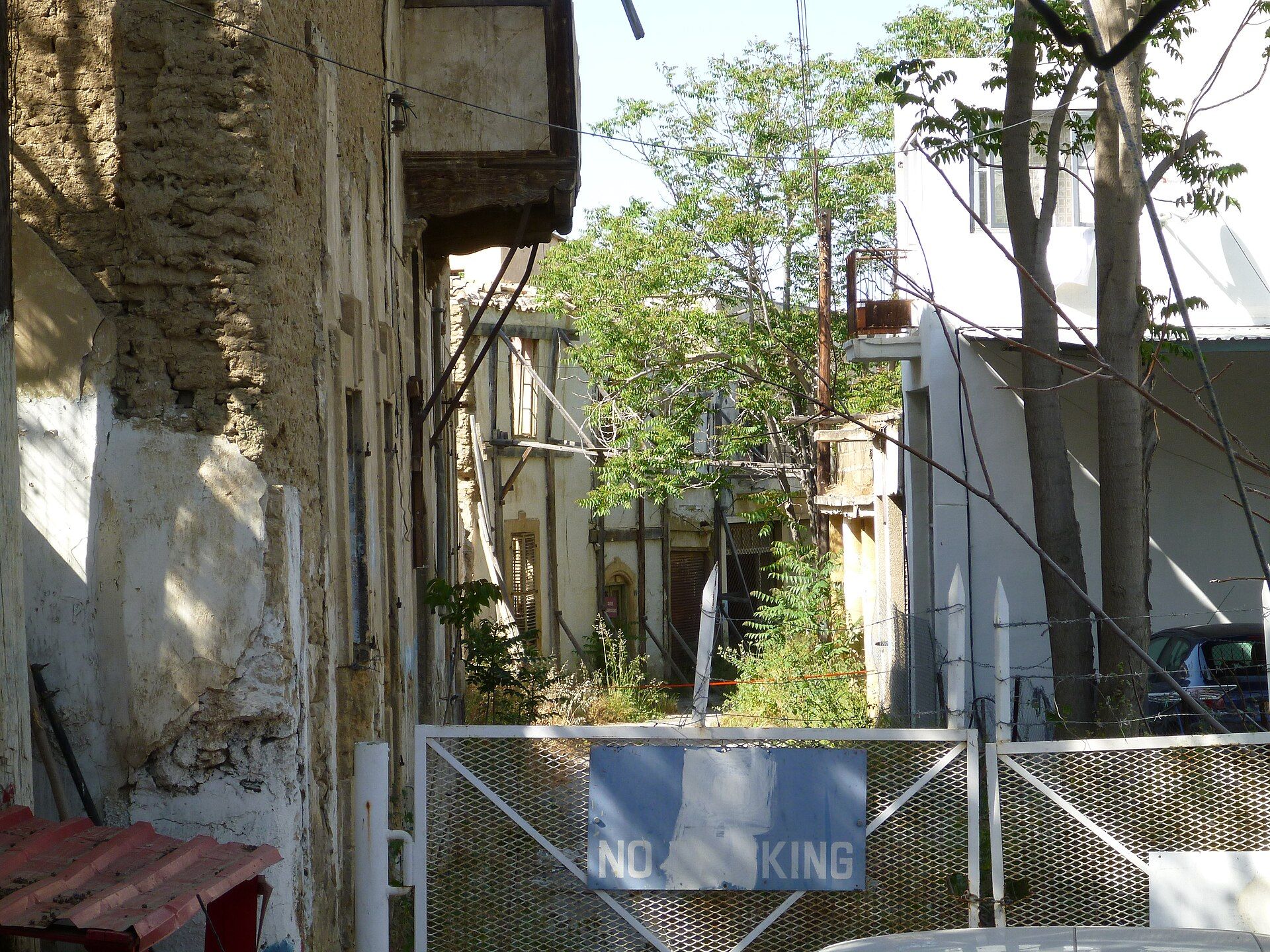
For Cyprus, consistency is more than an abstract test. The island remains divided following Turkey's 1974 invasion, and the Republic of Cyprus describes the north as territory under Turkish occupation. Republic of Cyprus foreign ministry.
In her published remarks in Nicosia on 5 November 2025, Kallas explicitly described Russia's war as aggression and highlighted sanctions against its economy. When addressing Cyprus, she supported UN-led settlement efforts and described Turkey as a key EU partner. The published remarks did not use “invasion” or “occupation” to describe Turkey's role in Cyprus. This is an observation about that statement, not proof that she has never used those terms elsewhere. Official EEAS transcript.
The fuller record also matters. In an 8 October 2025 parliamentary answer, Kallas affirmed that the EU recognises only the Republic of Cyprus as a subject of international law and upholds sovereignty and territorial integrity. It would therefore be inaccurate to claim that she recognises the breakaway administration or has said nothing in defence of Cyprus. Written answer E-001772/2025.
The fair challenge is sharper: why does unequivocal language about aggression in Ukraine sit alongside more guarded language about the occupation of an EU member state's territory? What practical pressure on Ankara follows Europe's declarations of principle?
Kallas cannot impose sanctions alone. The Council must agree unanimously on the underlying foreign policy decision. Responsibility for EU policy therefore extends to national governments as well as its diplomatic chief. Council explanation of sanctions adoption.
Why has this not produced a corruption prosecution?
A scandal is not the same as a demonstrated criminal offence. In the material reviewed for this article, the specific finding reported from Estonia’s internal security service was that Hallik’s business activities had not breached sanctions. That finding does not resolve every question of judgment, transparency or financial interest. It also cannot honestly be presented as evidence that Kallas committed a crime. ERR’s account of the security service’s finding.
This article has not established bribery, an unlawful exchange of favours or another criminal act by Kallas. It would be misleading to tell readers that the absence of a prosecution proves that prosecutors are protecting her. Any claim of criminal corruption must be supported by evidence of an offence, rather than inferred from her continued appointment.
But the absence of an established crime does not oblige citizens to endorse her conduct. Why should accountability begin and end with whether a prosecution is possible? Why should a politician’s own demanding moral language disappear when the scrutiny reaches her family’s financial interests? Those are questions her political defenders still need to answer.
What must change: public office cannot be a shelter from scrutiny
Corrupt politicians must not be allowed to retain power because they have influential allies. Where evidence establishes criminal wrongdoing, public office must provide no protection from investigation and prosecution. Where the issue is a serious ethical failure, political institutions should explain what consequences they consider appropriate instead of treating the absence of a conviction as sufficient reassurance.
The Kallas controversy makes the case for stronger standards: meaningful scrutiny of substantial financial ties involving leaders and their spouses; independent examination of potential conflicts; and public explanations of how unresolved ethical concerns are assessed before senior appointments. Such scrutiny should respect privacy while establishing whether private interests affect public responsibilities.
Officials should explain what they knew, when they knew it, and what checks they carried out. Appointing institutions should publish reasoned answers to material integrity concerns. If the answers are inadequate, they should be prepared to withhold support, demand corrective action or call for resignation.
These are proposals for political accountability, not findings that a particular disclosure rule was broken. Their purpose is straightforward: the standard for holding high office must be more demanding than the ability to survive an embarrassing news cycle.
The scrutiny must extend beyond Kallas
The same expectation should apply to other powerful figures, including Ursula von der Leyen and Christine Lagarde. Their individual records deserve separate, evidence-based examination; accusations against one leader cannot serve as proof against another. Commission leadership; ECB leadership.
No leader should receive a softer standard because their allies consider them indispensable. The question in this article remains Kallas’s record: the contradiction between her public demands and the Russia business linked to her husband, the adequacy of her explanations, and the decision to promote her despite the controversy.
Europe’s citizens deserve institutions willing to confront misconduct, demand answers and impose consequences. A moral compass means little if those holding power can demand standards from everyone else while escaping a convincing account of their own.
Photography and reuse credits
Kallas confirmation hearing, 12 November 2024 · © European Union, 2024 – Source: European Parliament · Reuse terms
Kallas at the European Parliament, 1 April 2025 · Alain Rolland / © European Union, 2025 – Source: European Parliament · Reuse terms
Geadis Geadi, official archive portrait, 2024 · © European Union, 2024 – Source: European Parliament · Reuse terms
UN buffer zone in Nicosia, 9 May 2012 · James Humphreys / Wikimedia Commons — CC BY-SA 3.0; unchanged · Reuse terms