

By Rodaportal Editorial Team
Following reported Democratic victories in the 2026 U.S. midterms, this article examines the theory that President Donald Trump deliberately allowed Republicans to lose in order to expose alleged election fraud. Meanwhile, videos questioning thousands of voter registrations at two Atlanta addresses have resurfaced. But what do the records actually show, and is there any evidence connecting the controversies?
Thumbnail: editorial composition combining a photographic Trump cutout with illustrative elements. Registration totals are allegations, not independently verified counts.
WASHINGTON, November 8, 2026 — The Democratic Party's victory in the November 3 midterm elections has dramatically altered the balance of power in Washington, with news organizations projecting Democratic majorities in the next House of Representatives and Senate. The new Congress takes office in January 2027.
The results represent a major political challenge for President Donald Trump, whose Republican Party suffered losses in states and congressional districts previously considered favorable territory.
Yet alongside the conventional explanations for the outcome, the theory examined here asks: What if Trump allowed Democrats to win deliberately?
Under this theory, the Republican defeat was not simply an electoral setback but part of a calculated strategy to expose alleged ballot manipulation, voter-registration irregularities or wider problems within the American electoral system.
This article evaluates that proposition; it does not independently establish how widely the theory has circulated.
However, there is no verified evidence establishing that Trump deliberately arranged, permitted or engineered a Republican defeat as part of a secret operation.
The distinction between genuine election-administration questions and an unproven political conspiracy is central to understanding the controversy.
Democrats Projected to Win the Next Congress
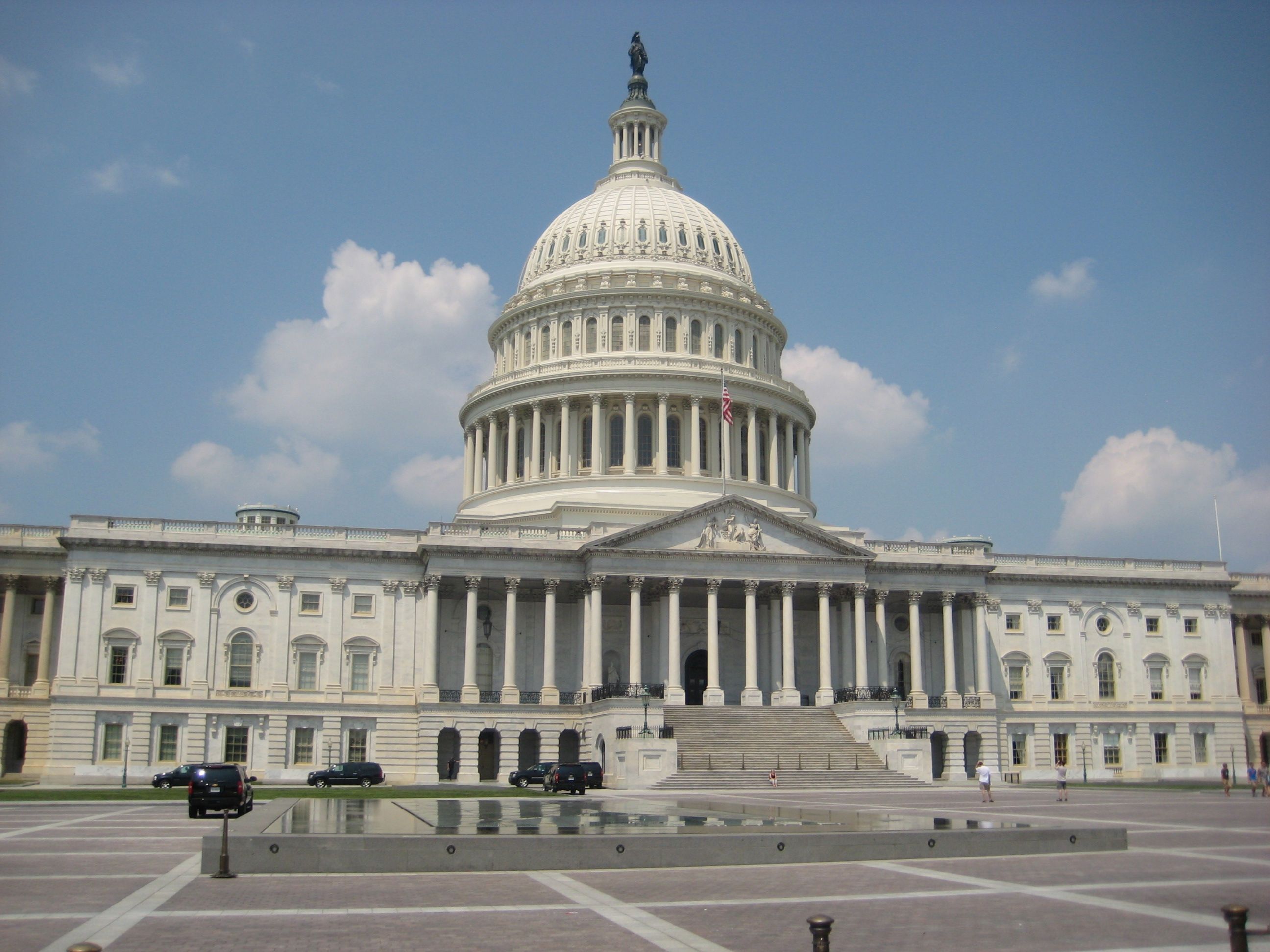
The November 3 elections delivered a substantial shift in American politics.
The Associated Press reported projected Democratic majorities and Senate wins in Texas, South Carolina and Kansas. Reuters likewise reported a Republican defeat. These are projections for the incoming Congress, rather than an immediate transfer of legislative control.
Reporting on voter dissatisfaction provides political context for the outcome.
These factors provide documented explanations for the election outcome without requiring an undisclosed operation.
The scale of an electoral loss does not itself supply evidence for an alternative account.
The Theory: Did Trump Know Something Others Didn't?
The central premise of the online theory is straightforward.
Its proponents speculate that Trump may have been aware of electoral misconduct and intentionally allowed it to continue so that investigators could collect evidence.
According to this interpretation, a Democratic victory could create an opportunity to expose alleged weaknesses in the voting system.
But this scenario requires evidence for several separate propositions: that a coordinated fraud operation existed, that Trump knew about it, that he possessed the means to intervene, and that he deliberately chose to allow the election outcome.
Those propositions have not been substantiated.
Nor has any authenticated document, court finding or official announcement reviewed for this article established such a plan.
An unusual election result, even one involving significant political losses, does not establish that the outcome was intentional.
The Atlanta Voter Registration Controversy
One of the more concrete allegations circulating in election-integrity discussions concerns voter registrations associated with churches and organizations serving people experiencing homelessness in Atlanta, Georgia.
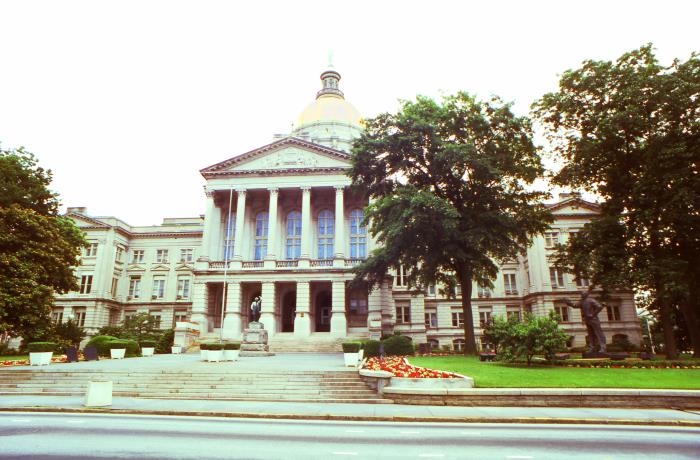
In a video reported by LifeZette on January 3, 2026, commentator David Khait questioned why large numbers of voters appeared to share two addresses near the Georgia State Capitol.
He identified:
- 201 Washington Street SW, where he alleged more than 1,000 people were registered.
- 48 Martin Luther King Jr. Drive SW, where he alleged more than 2,000 people were registered.
Khait argued that the concentrations of registrations deserved investigation and suggested that progressive organizations had helped register homeless individuals using the locations.
The video also alleged financial connections to Democratic donors, including billionaire George Soros.
The precise registration totals cited in the footage have not been independently confirmed in the records reviewed for this article. Neither has evidence been established showing that the alleged registrations resulted in illegal votes.
The video is also important chronologically: it was reported approximately ten months before the November 2026 midterms and cannot, by itself, demonstrate misconduct during that election.
What Is Located at 201 Washington Street?
The address is not merely an unidentified church building.
It is listed as the location of the Central Outreach & Advocacy Center, an Atlanta nonprofit providing services to vulnerable residents.
The organization's official website confirms its address at 201 Washington Street SW, directly across from the Georgia State Capitol.
The official address confirms the organization’s location. It does not independently validate the registration totals or establish whether individual registrations meet election requirements.
What About the Second Address?
The second address highlighted in the video is associated with the Central Presbyterian Church area.
An analysis by the voting-rights publication Democracy Docket identified a seasonal men's homeless shelter connected with Central Presbyterian Church, offering a possible explanation for why numerous people might use the location for registration purposes.
The investigation also noted that the videos did not establish whether the people identified on registration lists had actually cast ballots.
This distinction is critical.
Being registered to vote does not mean a person voted, and multiple registrations associated with one address do not necessarily mean that any registration was fraudulent.
Is It Legal for Homeless People to Register at a Church?
Yes, under applicable conditions.
Fulton County's official election guidance states that eligible voters experiencing homelessness may use the address of a church, shelter or another location where they routinely stay.
The county also provides an alternative registration-address procedure for people without a regular location.
That does not mean every registration using a shared address is automatically valid. Eligibility, residency information and compliance with election rules still matter.
But the existence of hundreds or thousands of registrations associated with an organization does not independently demonstrate illegal voting.
To determine whether misconduct occurred, investigators would need to examine the relevant records, individual eligibility and any evidence of improper ballots.
The George Soros Funding Allegation
Khait's video further alleged that organizations associated with progressive political causes received financial support from donors such as George Soros and participated in registering people experiencing homelessness.
Political organizations and nonprofit groups can lawfully conduct voter-registration activities, subject to applicable election laws.
Even if a financial connection to a political donor were established, that would not automatically establish electoral misconduct.
A meaningful investigation would require documented grants, recipient organizations, expenditure records and evidence connecting any funding to unlawful activity.
The sources reviewed for this article do not establish that Soros financed a fraudulent voting scheme involving the two Atlanta addresses.
Accordingly, that allegation remains unproven.
Why the Videos Matter — and What They Don't Prove
The Atlanta controversy illustrates how questions about voter registration can become intertwined with much broader allegations of election manipulation.
The video's underlying questions about voter-roll accuracy and shared addresses are specific enough to examine through official records.
But several separate issues must not be conflated.
A large number of registrations at one address is not equivalent to a large number of votes cast from that address. A lawful voter-registration drive is not equivalent to ballot harvesting or fraudulent voting. And the existence of a registration controversy does not establish that a president orchestrated an election defeat.
Independent reporting has challenged the interpretation presented in some of the Atlanta videos, while Fulton County's official guidance confirms that certain shared-address arrangements can be lawful.
These findings do not eliminate the need for election oversight. They establish the importance of evaluating each allegation against the relevant records and legal requirements.
Trump's Reaction to the Election
Another important consideration is Trump's response to the November 2026 results.
The Associated Press reported that Trump said he would accept the election outcome.
That response does not conclusively establish his private intentions, but it provides no affirmative support for the theory that the losses were deliberately engineered.
The projected Democratic majorities could bring additional oversight, legislative obstacles and investigations when the next Congress takes office.
Those are potential institutional consequences; the proposed secret strategy remains speculative.
Could There Still Be an Undisclosed Investigation?
Government investigations can sometimes remain confidential, and the absence of a public announcement does not prove that no investigation exists.
Nevertheless, journalism requires evidence before reporting that a specific covert operation is underway.
Credible support for the theory would require material such as authenticated communications, court filings, official investigative findings or corroborated firsthand testimony linking Trump to an intentional plan to permit election wrongdoing.
No such evidence was identified in the sources reviewed for this article.
Until it emerges, claims that Trump deliberately allowed Democrats to win cannot be presented as established fact.
What Happens Next?
Projected Democratic control of the next Congress could bring new oversight and legislative disputes. Any election challenge must be assessed on its own evidence and applicable procedures. A political disagreement or registration anomaly is not a finding that an election was stolen.
Conclusion: A Theory Still Awaiting Evidence
The theory that Donald Trump deliberately allowed Democrats to win the 2026 midterms to expose election fraud presents an extraordinary explanation for a significant political event.
The Atlanta voter-registration videos add a concrete controversy involving identifiable addresses, organizations and claims that can be examined against public records.
However, the available evidence does not establish that the registrations were fraudulent, that George Soros financed illegal voting, or that Trump intentionally allowed Republicans to lose.
The official Fulton County guidance offers a lawful explanation for some shared-address registrations, while election reporting provides conventional political context for the result.
The central allegation remains unproven: there is no verified evidence connecting the 2026 Democratic victory to a secret plan by Trump to expose ballot corruption.
Further documented findings could change the picture. Until then, the theory should be treated as speculation rather than a verified account of the election.
Rodaportal will continue to examine official findings, credible investigative reporting and newly available evidence concerning election integrity.
Verified sources and reading notes
- Associated Press: congressional election projections and Trump’s response
- Reuters Connect: Democrats projected to win Congress
- Fulton County: homeless voter information
- Central Outreach & Advocacy Center: official contact address
- Democracy Docket: analysis of shared-address allegations
- LifeZette, January 3, 2026: Khait’s allegations, not proof of fraud
Sources checked November 8, 2026. No voter-level audit, underlying registration extract or documented financial trail establishing the alleged scheme was available in these sources. The thumbnail’s church, encampment and ballot imagery are illustrative and do not document the Atlanta sites or an actual voting incident.
Topics: Donald Trump · 2026 midterms · Atlanta · Georgia · Voter registration · Election integrity · Fact check · Geopolitics