
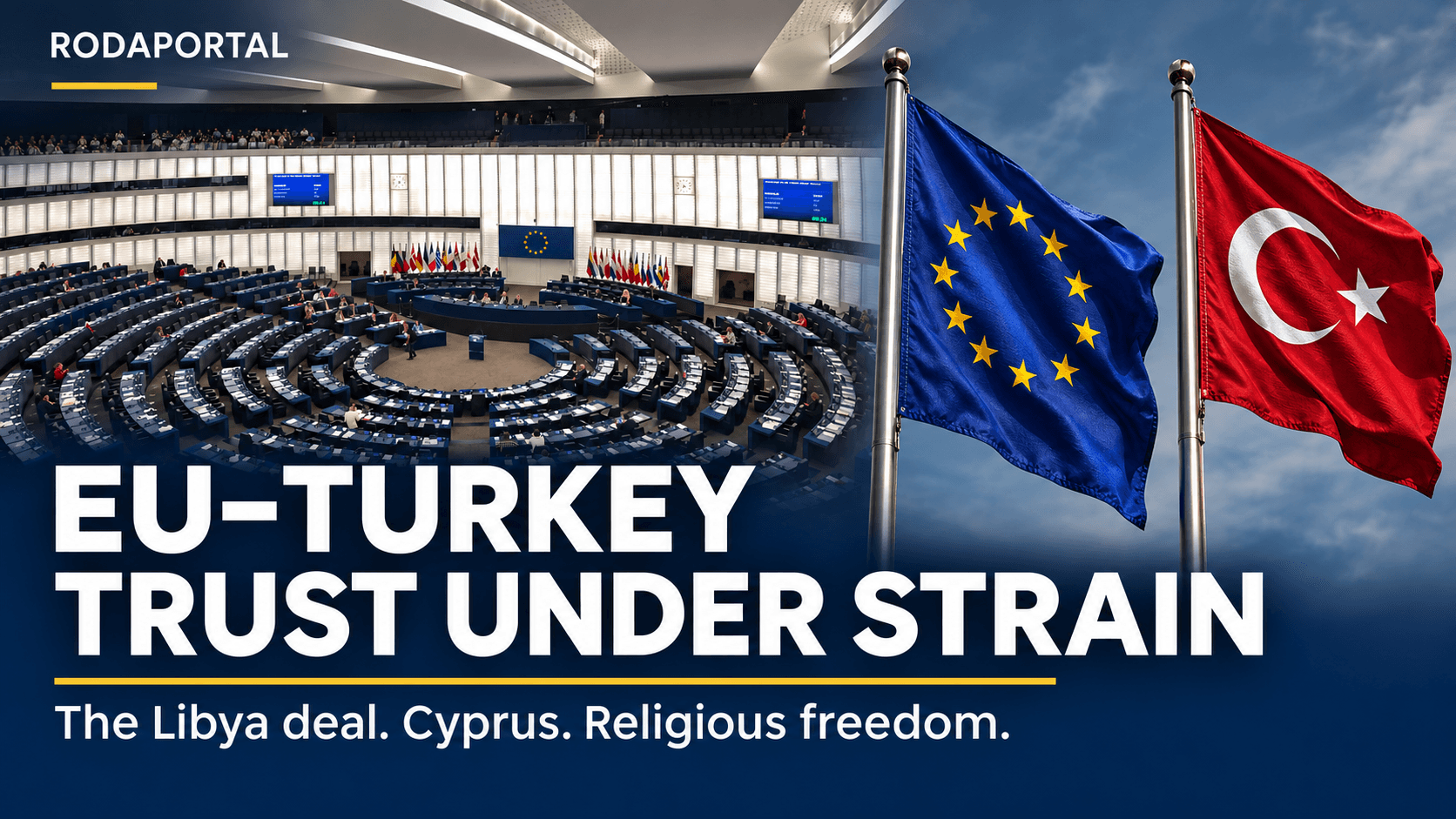
The European Parliament’s proceedings on the Turkey–Libya maritime memorandum have renewed a question that European governments have repeatedly postponed: how can closer cooperation with Ankara be reconciled with the protection of EU members’ sovereign rights?
Parliament debated the agreement on 24 November 2026. Its procedure records a vote on 26 November, while Turkey’s Foreign Ministry has confirmed that it rejects the resolution adopted that day. Ankara described the allegations as biased and disputed the EU’s competence over maritime delimitation. Parliament’s procedure and the Turkish statement record the institutional positions.
A parliamentary resolution expresses a political position; it does not itself constitute an international court judgment that cancels a treaty. That distinction strengthens an accurate account of the dispute.
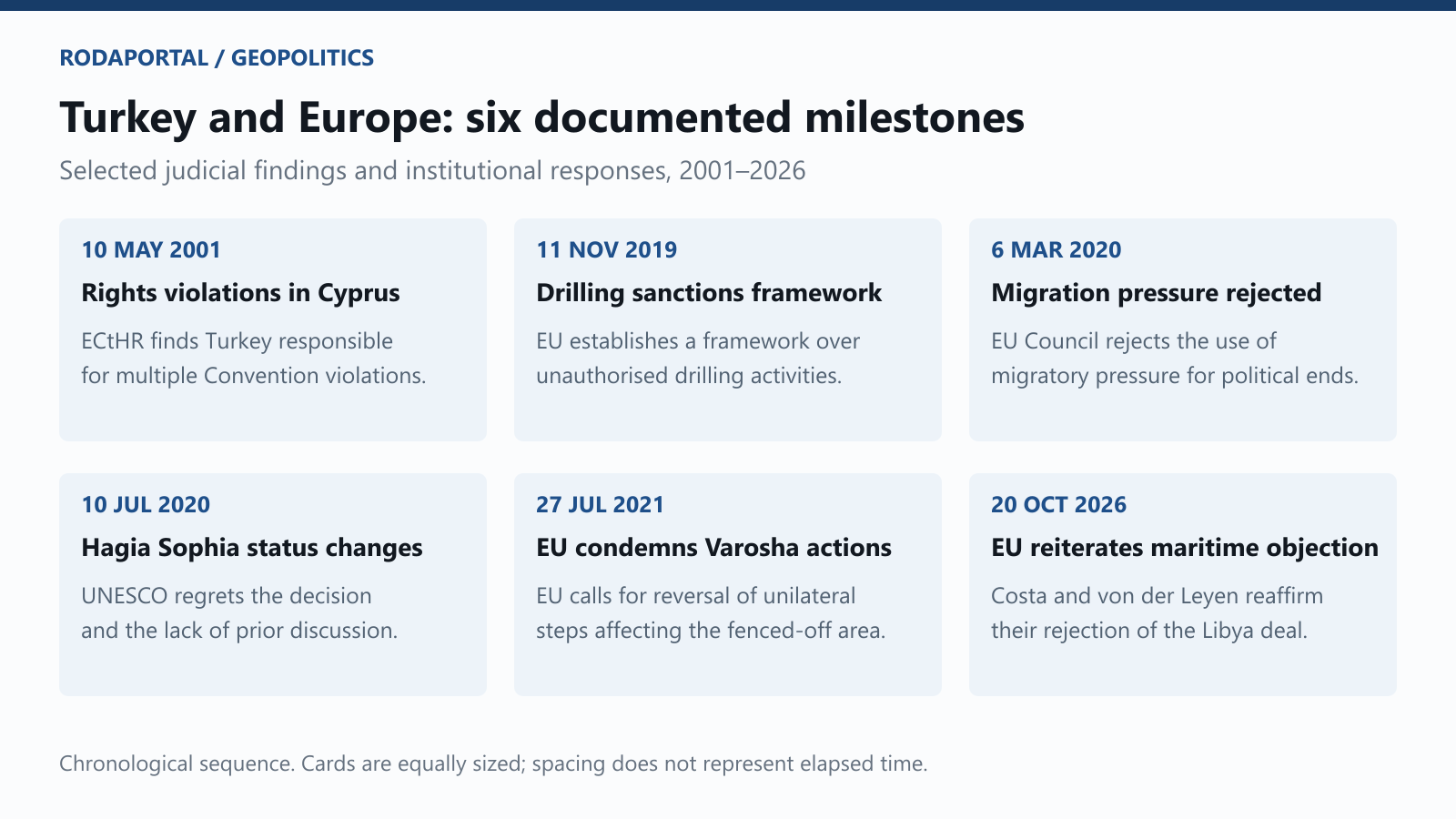
The EU’s objections are nevertheless explicit. In their joint statement of 20 October 2026, European Council President António Costa and Commission President Ursula von der Leyen reiterated that the memorandum violates third states’ sovereign rights, conflicts with the law of the sea and is null and void. They reaffirmed solidarity with Greece and Cyprus. Read the joint statement.
Greece: cooperation under a continuing threat
The maritime memorandum belongs to a broader dispute over the treatment of Greek islands and their maritime entitlements. Its implications therefore concern the Union’s capacity to defend the rights of a member state.
A separate issue is Turkey’s 1995 casus belli declaration concerning a possible Greek extension of territorial waters in the Aegean. The European Commission’s 2026 report records that the declaration remains in place.
The same report calls on Turkey to respect EU members’ sovereignty and sovereign rights, avoid damaging threats and pursue peaceful dispute settlement. These are concrete standards against which European governments can assess Ankara’s conduct. European Commission, Türkiye 2026 Report.
Diplomatic dialogue remains necessary. Its credibility, however, depends on whether threats are withdrawn and agreements are respected. Repeated meetings can sustain communication; confidence requires changes in policy.
Cyprus: a record of legal findings
Cyprus presents a particularly serious test of European consistency.
In Cyprus v. Turkey, decided on 10 May 2001, the European Court of Human Rights found Turkey responsible for multiple Convention violations. These included failures to investigate the fate of missing Greek Cypriots and violations concerning displaced people’s homes and property.
The Court also found that restrictions affecting Greek Cypriots in the Karpas region breached religious freedom because they limited access to worship and participation in religious life. Its findings included degrading treatment and violations affecting education. These were judicial findings concerning identifiable rights and communities. Read the Court’s judgment summary.
Subsequent disputes have produced further European responses. In November 2019, the Council established a sanctions framework over Turkey’s unauthorised drilling activities in the Eastern Mediterranean. In July 2021, the EU condemned unilateral actions concerning Varosha and called for their reversal. The sanctions framework and the Varosha declaration set out those responses.
A member state’s rights cannot reasonably become a secondary consideration whenever another government offers strategic cooperation.
Migration and political pressure
The dispute also concerns the methods used in relations with Europe.
On 6 March 2020, the EU Foreign Affairs Council explicitly rejected Turkey’s use of migratory pressure for political purposes. Its statement expressed solidarity with Greece and other affected member states.
The Council simultaneously recognised Turkey’s substantial burden as host to millions of migrants and refugees. Both observations matter. Hosting displaced people creates genuine responsibilities; using their vulnerability as political leverage remains subject to criticism. Foreign Affairs Council, 6 March 2020.
European cooperation should protect refugees while establishing clear limits on coercive conduct.
Christian heritage and freedom of worship
The treatment of Christian institutions provides another measure of the distance between official assurances and state practice.

In July 2020, UNESCO expressed deep regret over the Turkish authorities’ decision to change Hagia Sophia’s status without prior discussion. It called for the monument’s universal value to be preserved. The organisation subsequently recorded concerns over the changes affecting both Hagia Sophia and Chora. UNESCO’s statement and the World Heritage Committee’s decisions describe those concerns.
Religious heritage carries obligations concerning conservation and access, especially where monuments form part of a World Heritage property. Their significance includes living religious attachments as well as architectural history.
Christian communities also face practical restrictions. The Commission’s 2026 report states that no steps had been taken to reopen the Halki Greek Orthodox Seminary, closed since 1971. Separately, the US Commission on International Religious Freedom has documented residence restrictions and re-entry bans affecting foreign Protestant clergy and religious workers. Commission report; USCIRF country update.
The ability to educate clergy and maintain religious institutions is a basic condition of community continuity. It deserves a consistent place in European diplomacy.
What should European trust require?
Is this the Turkey that Europe really wants to trust?
The question concerns the conduct of the Turkish state and the terms of European cooperation. Turkish citizens themselves have an interest in enforceable rights and accountable government.
Europe can maintain dialogue while attaching clear conditions to deeper relations. Respect for Greece and Cyprus should be measurable. Religious communities should be able to organise their affairs under predictable legal rules. Cultural heritage obligations should be honoured.
The policy conclusion is straightforward: closer cooperation should follow verified compliance. European institutions should identify the changes they expect, assess the evidence and explain what follows when commitments are ignored.
Turkey’s strategic importance gives Europe reasons to engage. The documented disputes give Europe equally strong reasons to demand conditions.
European Parliament · 24 November 2026
The video index places Commissioner Šuica’s intervention at approximately 6:49:00 and Giannis Maniatis’s call for sanctions at 6:55:00.
Open video and chapter index ↗
Image credits and reuse licences
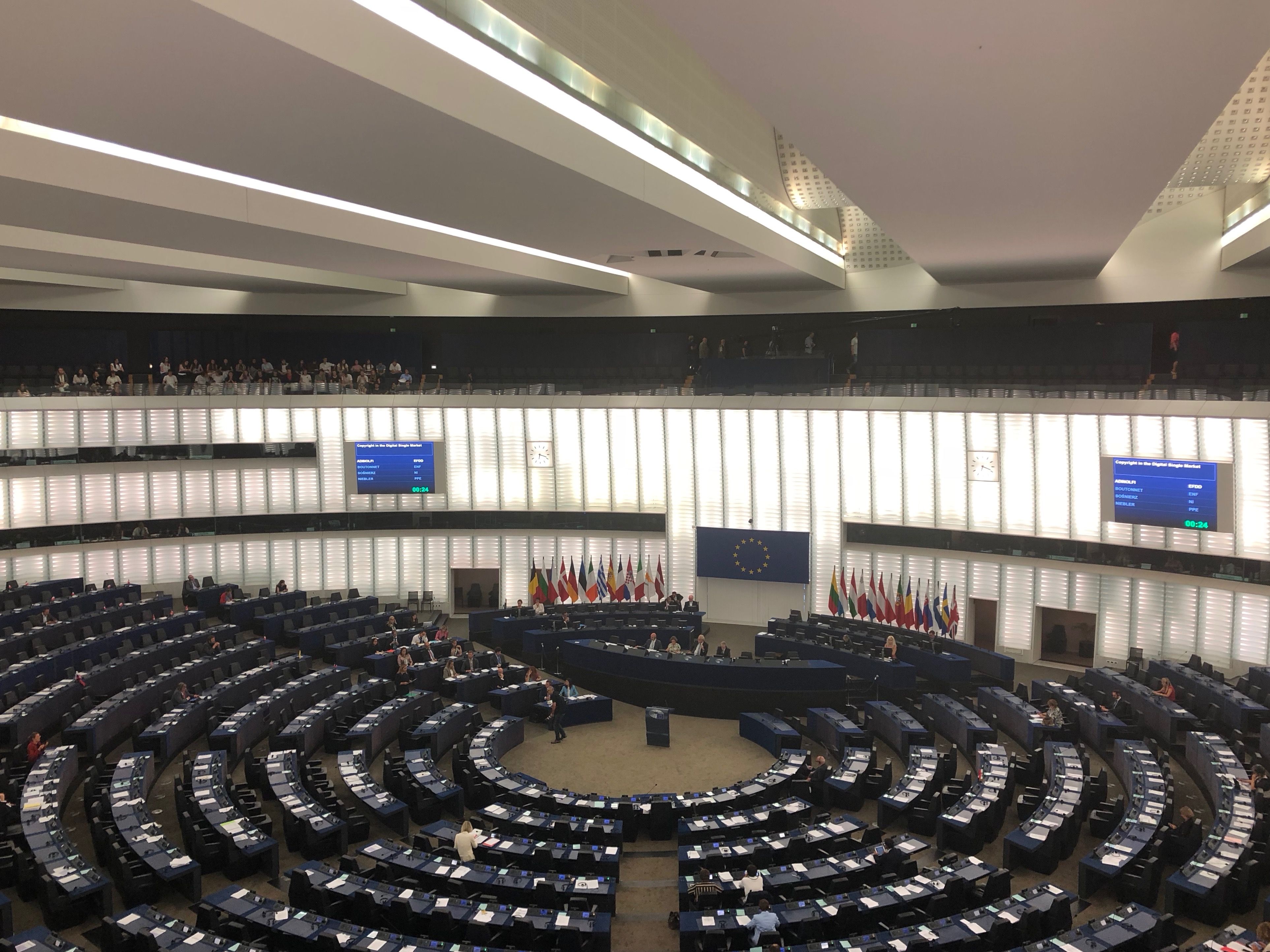
European Parliament — Hann Lans · CC0 1.0 · Archive photograph, 11 September 2018. Neither image depicts the November 2026 debate or the 2020 status change.
Hagia Sophia — Jorge1767 · Public domain dedication by the photographer · Archive photograph, 2008. Neither image depicts the November 2026 debate or the 2020 status change.
Thumbnail: Rodaportal editorial composite, created with an image-generation tool from the CC0 Parliament photograph by Hann Lans and symbolic flag graphics. The separation represents diplomatic disagreement, not an announcement that relations have ended.
Timeline: original Rodaportal graphic, based on the linked institutional records. Archive photographs shown in their original landscape proportions.