
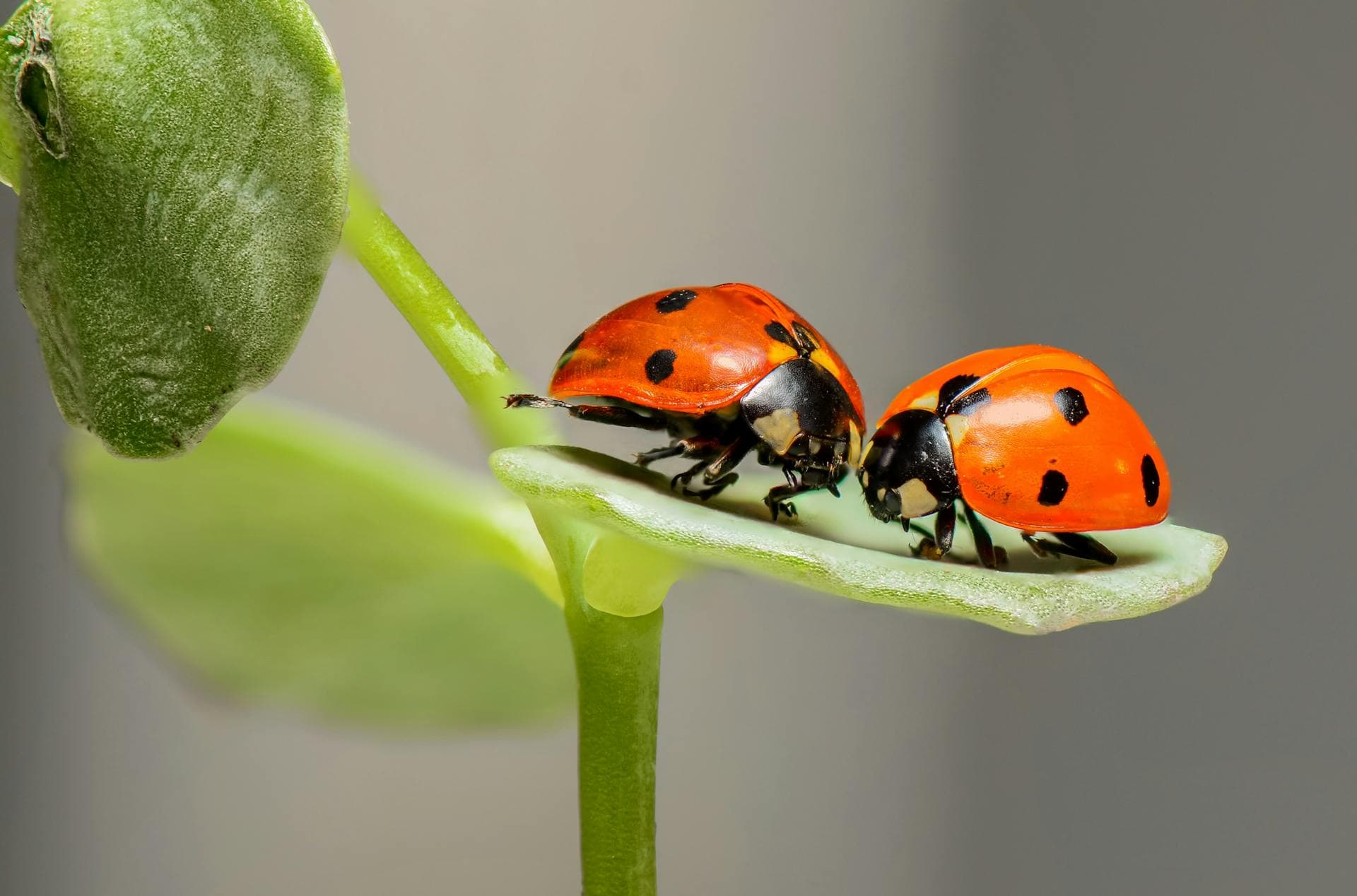
A diverse family of beetles
Ladybirds, also called ladybugs or lady beetles, belong to the beetle family Coccinellidae. Their colours and patterns vary by species. Some are familiar red-and-black garden visitors; others are yellow, orange, black or patterned differently. Bright colours can warn predators that some species taste unpleasant, although appearance alone is not a reliable way to identify a species.
Their role in gardens and agriculture
Many lady beetles eat aphids, scale insects and other small pests. Their diet depends on the species and life stage: both larvae and adults of some species are predators, while others feed on plants, fungi or pollen. The U.S. Department of Agriculture’s research programme describes thousands of known species and documents the importance of identifying which species provide useful pest control.
That makes ladybirds one part of integrated pest management, not a universal replacement for other methods. Farmers and gardeners need to consider the crop, pest, local conditions and potential effects on beneficial insects before introducing any biological-control species. Moving non-native insects can cause ecological harm, so biological control programmes require careful assessment and monitoring.
What the space experiment showed
Ladybirds have also featured in space-based biology. NASA’s Shuttle-era materials describe an experiment studying the interaction between ladybirds and aphids in microgravity. The existence of that experiment is well documented; it should not be overstated as proof that ladybirds are uniquely adapted to space or that they successfully controlled aphids in every condition. It was a small research question about predator–prey behaviour beyond Earth.
The practical lesson is less dramatic but more useful: ladybirds can help suppress certain pests, and their effectiveness depends on species and context. Protecting habitat and avoiding unnecessary insecticide use can support beneficial insects already present in an ecosystem.